

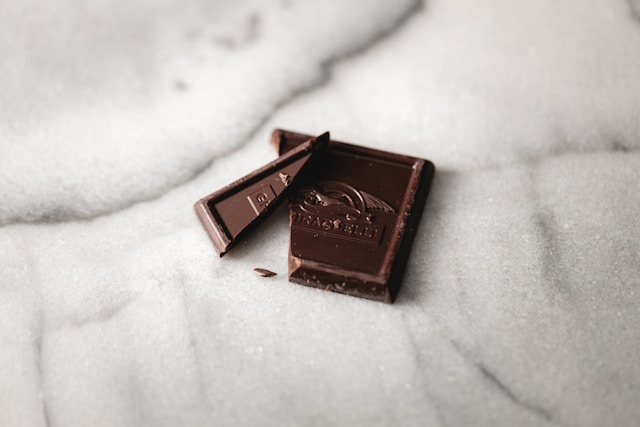
Whether it’s milk, dark, or white chocolate, in bar or powder form, as an ingredient or a snack, chocolate is a favorite food all over the world.
However, because it is often associated with indulgence and sweets, its health benefits are easily overlooked. In this article, learn more about the origins and types of chocolate, as well as their properties, which—when consumed in moderation—can make a difference in your diet.
Source
Chocolate is made from cocoa beans, and the differences between the various types of chocolate stem from their cocoa content, as well as from the evolution of the industry and culinary techniques, which have also contributed to this diversity. There are many options available, including dark chocolate, milk chocolate, white chocolate, chocolate with nuts, filled chocolate, chocolate with fruit, caramel, cookies, and candies, among others.
Since cocoa butter is its main ingredient, it’s no surprise that chocolate is high in calories and fat (mostly saturated fat), and in most cases, sugar is one of its first ingredients. However, chocolate also contains polyphenols that may have beneficial effects on your health.
Ingredients
There are essentially three different types of chocolate: milk chocolate, dark chocolate, and white chocolate. Milk chocolate contains a lower percentage of cocoa than dark chocolate, while white chocolate contains no cocoa at all.
The health benefits associated with eating chocolate are usually due to a higher cocoa content, which is why dark chocolate is considered the healthiest option.
Although these chocolates have similar average calorie counts, there are significant differences in their ingredient lists and nutritional values.
Although chocolates with a higher cocoa content have lower sugar levels, this does not mean they are lower in calories, since a higher cocoa percentage means a higher amount of fat, not to mention any oils that may be added. As such, although it is often believed that chocolate with a higher percentage of cocoa is a better choice for weight loss and weight management, this may not be the case.
What for?
Chocolate is associated with a stimulating effect due to its theobromine content, a substance in the caffeine family that has a mildly stimulating effect on the body.
Due to their flavonoid content (400–800 mg per 40 g of dark chocolate), cocoa beans possess antioxidant properties that are particularly beneficial for cardiovascular health, thanks to their ability to inhibit the action of free radicals.
Chocolate also contains tryptophan, an amino acid necessary for the production of serotonin—known as the "happiness neurotransmitter"—which plays a crucial role in regulating mood and well-being.
Despite its benefits, chocolate should be consumed in moderation as part of your daily diet due to its high calorie, fat, and sugar content.
Since different types of chocolate have different characteristics, it is difficult to establish a recommended daily amount of chocolate. A common recommendation is 10 to 25 grams per day (1 to 2 squares of a bar, a small bar, or a single piece of chocolate), but each person has different characteristics (taking into account gender, age, level of physical activity, and other factors), so you should seek advice from a professional to determine the appropriate amounts for you.
Tips from a Nutritionist
- Choose a chocolate that you enjoy eating and savor it in the amounts that are right for you. It’s better to eat a piece of chocolate a day than to think about sweets all day long, as long as you’re mindful of the amounts you choose.
- When making your choice, pay close attention to the ingredient list. Keep in mind that the more ingredients a product has, the more processed it is. Ingredients are listed in descending order of quantity, so choose a chocolate:
- with a cocoa content of more than 70%;
- that does not contain sugar (or derivatives such as glucose, syrup, fructose, maltodextrin, honey, molasses, etc.) among its first three ingredients;
- ideally without (partially) hydrogenated fats.
- One way to enjoy the taste of chocolate while cutting back on sugar and fat is to choose low-fat cocoa powder or cocoa nibs. There are also some options that use stevia as a sugar substitute.
- Chocolate consumption should be part of an active and healthy lifestyle that includes a complete, varied, and balanced diet.
- Caution is advised in cases of overweight or obesity, diabetes, dental problems, and gastrointestinal issues (heartburn, acid reflux, irritable bowel syndrome, or diarrhea).
To put the knowledge you’ve gained from this article into practice, here’s a quick and easy recipe for a mug cake.
Ingredients
- 1 square of chocolate (chosen based on the tips provided)
- 3 tablespoons of plant-based milk (almond, coconut, oat, etc.)
- 3 tablespoons of oat flour
- 2 tablespoons of cocoa powder
- 1 tablespoon coconut sugar or another sweetener
- 1 tablespoon coconut oil
- ¼ teaspoon baking powder
Preparation Instructions
- Put the oat flour, cocoa powder, sugar, and coconut into the mug.
- Add the coconut oil, plant-based milk, and baking powder
- Mix all the ingredients thoroughly and stir well until the batter is smooth
- Place the square of chocolate in the middle of the mixture in the mug.
- Place the mug in the microwave and heat it for 2 minutes on high.
At TO BE. Estética, we offer a comprehensive clinical nutrition service that is fully tailored to your needs, with ongoing support and care.
Learn more here and contact us if you have any questions.
Sources
- Barbosa M et al. 5 Questions About Chocolate. Portuguese Association of Nutritionists.https://www.apn.org.pt/documentos/guias/5_QUESTOES_SOBRE_CHOCOLATE_APN_Final.pdf
- Montagna MT, Diella G, Triggiano F, Caponio GR, De Giglio O, Caggiano G, Di Ciaula A, Portincasa P. Chocolate, “Food of the Gods”: History, Science, and Human Health. Int J Environ Res Public Health. 2019;16(24).https://www.mdpi.com/1660-4601/16/24/4960
- Sudano I, Flammer AJ, Roas S, Enseleit F, Ruschitzka F, Corti R, Noll G. Cocoa, blood pressure, and vascular function. Curr Hypertens Rep. 2012 Aug;14(4).https://www.ncbi.nlm.nih.gov/pmc/articles/PMC5539137/
- Tuenter E, Foubert K, Pieters L. Mood Components in Cocoa and Chocolate: The Mood Pyramid. Planta Med. 2018;84(12-13).https://www.thieme-connect.com/products/ejournals/html/10.1055/a-0588-5534
- Latif R. Chocolate/cocoa and human health: a review. Neth J Med. March 2013;71(2).https://www.njmonline.nl/getpdf.php?id=1269