
The end of cancer treatment is often a moment that is difficult to put into words. Alongside the relief of having gone through the hardest part comes a range of effects that the body continues to process in silence. Vaginal dryness, vaginal atrophy, urinary tract infections, weight changes, persistent fatigue, and loss of libido—these are some of the most common challenges women face after cancer, and yet they are the least discussed during follow-up appointments.
A study presented at the San Antonio Breast Cancer Symposium (2026) revealed that most breast cancer patients were never asked by their doctors about their sex lives, even when they were experiencing significant symptoms. At TO BE., we work to ensure that you always feel understood.
How the treatment affects hormonal balance
Cancer treatments—surgery, chemotherapy, radiation therapy, and hormone therapy—are rigorous and necessary, but they affect the tissues and hormonal functions that maintain the balance of the female body, with consequences that linger long after the last treatment.
One of the most common side effects is menopause induced by cancer treatments: a rapid drop in estrogen that occurs much more abruptly than in natural menopause. The result is a set of more intense symptoms, and vaginal dryness.
Vaginal Dryness: A Treatable Symptom That Should Not Be Ignored
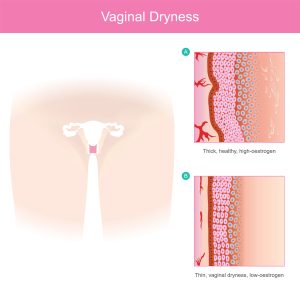
The vaginal mucosa relies on estrogen to stay hydrated, elastic, and pH-balanced. When hormone levels drop suddenly, a condition known clinically as genitourinary atrophy: the mucosa becomes thinner, drier, and more sensitive. In cases where hormone therapy is ongoing, such as the use of tamoxifen or aromatase inhibitors, this effect can last for years.
According to data from the Portuguese League Against Cancer, sexual difficulties affect between 40% and 85% of women undergoing cancer treatment. Although it is a common issue, it continues to be avoided during consultations. And this is exactly what we want to change.
Most common symptoms
- A burning or itching sensation in the vagina;
- Pain during sexual intercourse (dyspareunia);
- Increased susceptibility to urinary and vaginal infections;
- Urinary urgency or incontinence.
These symptoms are real, common, and respond well to treatment when addressed early.
Available clinical approaches
Specialized care allows us to identify the option best suited to each patient’s profile. At TO BE., this assessment is conducted by a multidisciplinary team:
- Topical moisturizers and lubricants are the first line of defense for all women, regardless of the type of cancer being treated. Hormone-free vaginal moisturizers (hyaluronic acid-based) and water-based lubricants are safe, effective, and suitable for regular use.
- Low-dose topical estrogen, in the form of a cream or vaginal suppository, may be a good option for some patients, with minimal absorption by the body. The decision is always made in consultation with the oncology team.
At TO BE., we offer creams and custom-compounded medications tailored to each woman’s needs.
Weight and body composition after cancer
Weight changes are another very common—yet often misunderstood—side effect of cancer treatment. Weight gain following breast cancer, for example, has several causes: induced menopause, fat accumulation in the abdominal area, the use of corticosteroids, and metabolic changes caused by a drop in estrogen levels.
In addition to the impact on self-esteem—which should not be overlooked—being overweight after breast cancer is associated with a higher risk of recurrence. Weight management therefore has real clinical implications.
Just as important as weight is body composition. Loss of muscle mass and strength is common after prolonged treatments and manifests as persistent fatigue and difficulty getting back to one’s usual routine. It is important to have a body composition assessment.
Intimacy, desire, and body image
Sexuality is a fundamental aspect of human health, recognized by the World Health Organization as a basic right. In the context of cancer care, it is also one of the most overlooked aspects.
A loss of sexual desire, difficulty experiencing pleasure, fear of pain, and changes in body image—these factors affect every woman’s relationship with herself and with others. Surgeries such as mastectomy or hysterectomy, hair loss, scarring, and weight changes profoundly impact a woman’s identity. This adaptation process requires time and specialized support, and should be an integral part of the treatment plan, not an optional extra.
When to seek help
TO BE. is a medical clinic with a multidisciplinary team that supports women during this period following breast cancer, and helps them overcome the challenges of cancer recovery and the symptoms associated with the onset of menopause.
Seek professional help if:
- Vaginal dryness or pain interferes with quality of life or sexual activity;
- Body weight changed significantly after treatment;
- Fatigue or loss of muscle strength limits daily activities;
- Body image or self-esteem are compromised;
- Their emotional and sexual lives have been affected and have not yet been addressed medically.
Most of these situations can be resolved. The first step is to talk to someone who can help.
At TO BE., we treat every woman as a whole person
TO BE. is a medical clinic. Our care model integrates endocrinology, healthy longevity medicine, internal medicine, aesthetic medicine, physical therapy, exercise physiology, psychology, and clinical nutrition—a multidisciplinary team dedicated to addressing, with scientific rigor, the issues that most affect women’s health and quality of life after cancer.
Because recovering from illness is just the beginning. Living life to the fullest is the goal.
Sources: Portuguese League Against Cancer | San Antonio Breast Cancer Symposium (2026) | World Health Organization