


Raquel Cruz
Physical Therapist
Lipedema is a chronic condition that affects almost exclusively women and that, as of 2026, remains widely underdiagnosed—it is often mistaken for obesity, cellulite, or lymphedema. Without early diagnosis and timely intervention, however, it progresses to more severe stages, characterized by chronic pain and functional limitations. Therefore, recognizing the signs and distinguishing lipedema from other physical conditions is the first step toward restoring quality of life to women living with this condition.
This article explains what lipedema is, how to recognize it, how to distinguish it from other physical conditions, and what treatment approach to follow.
What is lipedema?
Lipedema is a chronic disease characterized by abnormal fat accumulation, primarily in the legs and arms. It is, in fact, a vascular condition of the adipose tissue with an inflammatory basis, multifactorial in origin, and strongly influenced by genetic and hormonal factors.
Fat accumulation is progressive, disproportionate, and symmetrical, and may occur in the buttocks, hips, lower extremities (thighs and/or legs), or arms. However, it does not affect the feet or hands. Pain and discomfort are common and are associated with systemic inflammation.
In addition, the condition is also characterized by sensitivity to touch, frequent bruising, and difficulty losing fat in the affected areas, even with diet and exercise. Beyond its physical impact, it has significant social and psychological consequences, especially because it is often confused with other cosmetic conditions.
In summary: lipedema is a fat-related condition, but unlike obesity, the fat accumulates in localized, symmetrical, and painful deposits.
Types of lipedema
Lipedema is classified based on the location of fat accumulation:
- Type I: buttocks and hips.
- Type II: glutes, hips, and thighs.
- Type III: glutes, hips, and lower limbs.
- Type IV: arm area.
- Type V: leg area.

Stages of lipedema
Lipedema progresses gradually and is classified into four stages:
- Stage 1: smooth skin, but with some fat already accumulated; there may be pain and tenderness.
- Stage 2: uneven skin surface (orange-peel-like), with noticeable fatty nodules.
- Stage 3: visible deformity, with large fat deposits and reduced mobility.
- Stage 4 (lipolymphedema): a combination of lipedema and lymphedema, with associated swelling, particularly in the ankles and feet.
This is because lipedema is a chronic and progressive condition—without treatment, it progresses to more severe stages, leading to immobility, limb deformities, chronic pain, secondary lymphedema, and significant psychological impact—and can even lead to depression and social isolation.

How to tell if you have lipedema
Early detection is crucial. Even so, lipedema remains underdiagnosed and is often mistaken for other conditions, which delays treatment and worsens symptoms.
Signs that may indicate lipedema
The most common signs that suggest lipedema are:
- Symmetrical and disproportionate fat accumulation in the legs and/or arms, in contrast to a slimmer torso;
- Pain, tenderness, and a sensation of heaviness in the affected limbs;
- Frequent bruising for no apparent reason;
- Difficulty losing fat in the affected areas, even with diet and exercise;
- Feet and hands remain normal (not swollen);
- Family history of similar conditions;
- Onset or worsening of symptoms during significant hormonal phases (puberty, pregnancy, menopause). When several of these signs are present at the same time, the likelihood of lipedema is high, and a specialized evaluation is warranted.
Differential diagnosis
The diagnosis of lipedema is based on four pillars:
- Medical history;
- Signs and symptoms;
- Physical examination;
- Exclusion of other conditions (obesity, cellulite, lymphedema).
Lipedema Index, an exclusive tool from TO BE.Clínica by Teresa Branco
This tool allows TO BE. to use a proprietary assessment tool—consisting of 19 questions—to classify the results into one of three scenarios and, in this way, even remotely, guide each client on the next steps to take:
- Reduced likelihood of lipedema: the symptoms may be associated with other conditions, such as obesity, cellulite, or lymphedema, and it may be advisable to undergo an evaluation to identify the cause.
- Possible lipedema – in-person evaluation required: when the answers suggest a strong possibility of lipedema, an in-person evaluation is recommended for a personalized assessment.
- Lipedema, need for intervention: the results strongly suggest the presence of lipedema. Early intervention is essential to reduce symptoms and improve quality of life.
How to treat lipedema in Portugal
Because lipedema is a chronic and complex condition, treatment must be multidisciplinary. Therefore, isolated treatment strategies are not recommended. Since it is a chronic and complex condition, it requires the involvement of different professionals to ensure comprehensive and effective care—centered on the patient, focused on functionality rather than just aesthetics, and based on a conservative approach, in which a physician, physical therapist, clinical nutritionist, and psychologist are responsible for the intervention strategy.
How to alleviate lipedema: physical therapy intervention
Physical therapy is the first line of conservative treatment, especially in the early and intermediate stages. The goals are clear:
- Reduce pain and fascial changes;
- Reduce swelling;
- Improve the appearance of the skin;
- Improve function;
- Prevent the condition from progressing;
- Improve quality of life.
Physical therapy intervention strategies
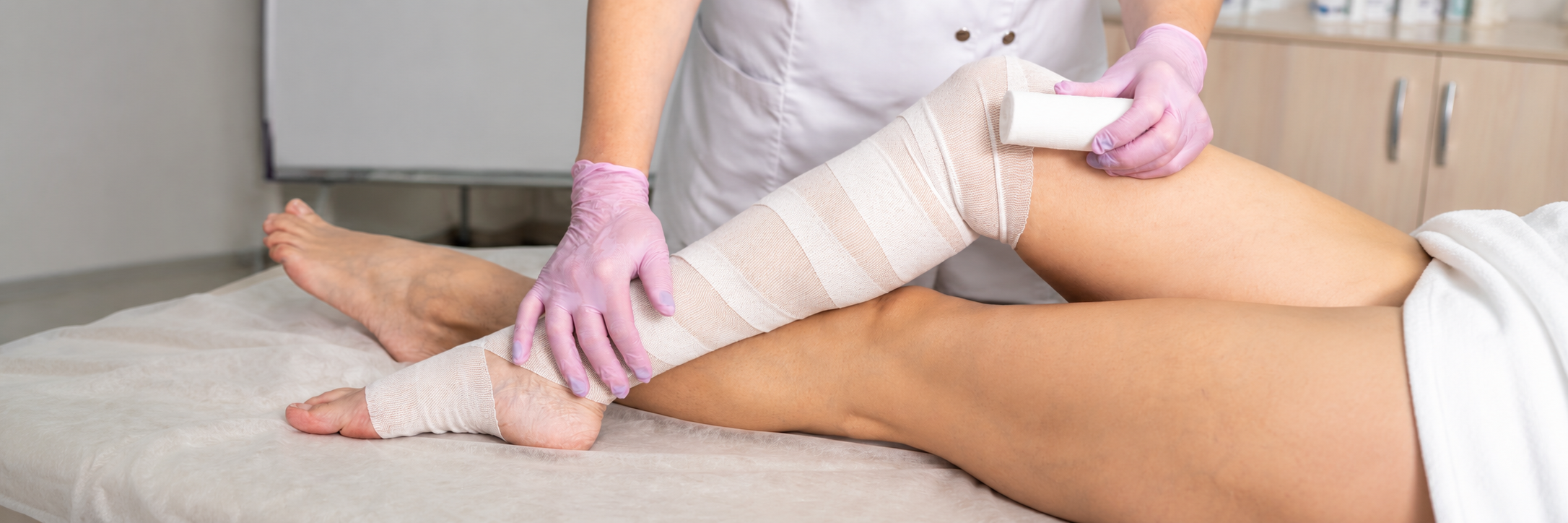
- Advice on therapeutic compression (custom-fitted compression stockings);
- Lymphatic drainage, as a technique combined with other approaches;
- Gentle manual techniques;
- Non-invasive fascial mobilization;
- Techniques for pain relief, inflammation control, and fat reduction;
- Shock wave therapy;
- Development of therapeutic exercises and exercise progression strategies, in collaboration with the physiologist.
What are the best exercises for lipedema?
Exercise does not worsen lipedema, but it must be adapted accordingly. As long as this rule is followed, however, exercise is safe, beneficial, and helps maintain mobility, manage weight, control metabolism, and relieve symptoms.
Therefore, the recommendations are as follows:
- Low-impact aerobic exercise of moderate intensity that avoids exhaustion (cycling, water aerobics, yoga, Pilates, and swimming);
- Progressive strength training, focusing primarily on the lower body and core, to improve stability and muscle endurance, always within pain-free limits;
- Skin care to prevent complications;
- Education and self-management of the condition, including effective expectation management and self-care strategies.
Conclusion: Early detection leads to better treatment
In the specific case of lipedema, this connection is crucial: because lipedema is a chronic condition, no single intervention can cure it.
TO BE. – Clínica by Teresa Branco is a multidisciplinary clinic dedicated to health, well-being, and quality of life, with a team trained in weight management, dermatofunctional physical therapy, clinical nutrition, medicine, and psychological counseling. In the specific case of lipedema, this multidisciplinary approach is crucial: no single intervention can resolve the condition on its own.
The journey at TO BE. thus begins with the Lipedema Index, the clinic’s exclusive 19-question assessment tool, which helps classify each case and determine the likelihood that it involves lipedema. Based on these results, an in-person evaluation and a personalized plan are developed, focused on reducing symptoms, improving function, and preventing the condition from progressing—always centered on the patient and their specific needs.
Therefore, anyone who recognizes the signs described in this article can schedule a specialized evaluation with the TO BE team . However , if you haven’t had the opportunity to watch our workshop on lipedema, you can view it here.