


Teresa Branco
Director of TO BE.
What's really behind the chip that dominates social media, and what every woman should know before considering this option
In recent months, the term “beauty chip” has taken over conversations, social media, and television shows. Suddenly, Brazilian actresses and public figures in their 50s appeared visibly transformed—more muscular, with less body fat, and firmer skin. When asked, many pointed to a hormonal implant as the reason for the change. Thus, the term took hold, and with it, curiosity grew.
In TO BE., we work to ensure that every woman makes decisions based on solid information.
A study presented at the San Antonio Breast Cancer Symposium (2026) reinforced what we already know from clinical practice: the vast majority of women do not receive sufficient information during follow-up appointments about the effects of hormonal treatments on their bodies. In other words, the “beauty chip” is yet another example of this—a topic that circulates widely on social media but with little clinical context. That is why this article aims to change that.
What, exactly, is the beauty chip?
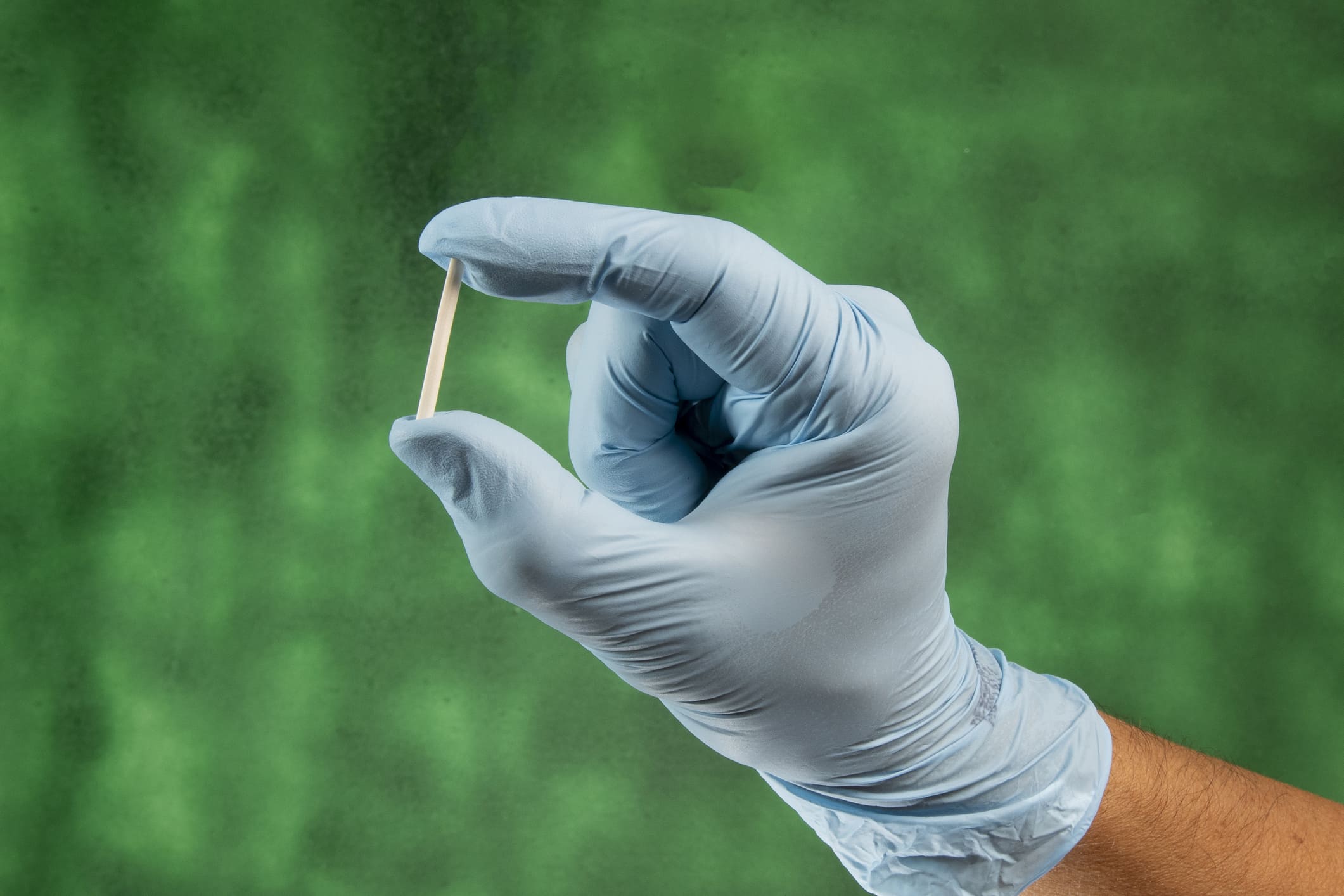
It is a small implant, about the size of a grain of rice, that is inserted under the skin—usually in the arm or buttock—through a small incision. Once in place, it continuously releases one or more hormones over a period ranging from six months to a year. In addition, the most modern models are naturally absorbed by the body at the end of this period, without the need for any procedure to remove them.
The substance most commonly associated with this implant is gestrinone, a synthetic hormone created in a laboratory. Unlike estrogen, progesterone, or testosterone, gestrinone is not produced naturally by the body.
Gestrinone was initially developed to treat conditions such as endometriosis and adenomyosis—diseases characterized by excess estrogen that seriously impair the quality of life of women of childbearing age. Over the course of its medical use, however, experts began to observe changes that many women came to value: increased muscle mass, reduced body fat, firmer skin, and the cessation of menstruation.
What does this substance do in the body?
Gestrinone works primarily in two ways: it reduces estrogen levels and stimulates testosterone production. It is therefore considered an androgen, a hormone with characteristics more commonly associated with the male profile.
As a result, women develop a hormonal profile with higher androgen levels: they build more muscle, burn more calories at rest, and achieve a more defined body composition. Thus, those who were already exercising and eating a balanced diet can achieve results they couldn’t before—the hormone amplifies and enhances the effects of an active lifestyle.
There is, however, one fundamental point: no hormone works on its own. Gestrinone does not build muscle by itself. Without exercise and a proper diet, results will not materialize; in other words, the supplement acts as a physiological accelerator, working in synergy with healthy habits — not as a substitute for them.
The Advantage of Continuous Release
One of the most significant features of the patch compared to other forms of hormone replacement—such as gels, creams, or capsules—is the way the substance enters the body.
When a gel is applied daily, hormone levels fluctuate: they rise after application and gradually decline until the next dose. With the chip, the release is constant and uniform, much closer to the body’s natural rhythm. This results in a more stable hormonal balance—without spikes or fluctuations—and a more consistent physiological experience.
There's also the added convenience: no daily routines, no schedules to follow, and no need to worry about applying the product at the right time.
Beyond Gestrinone: The Future of Hormone Replacement Therapy
The "beauty chip," in its formulation with gestrinone, is the starting point for a technology with much broader potential.
The same implant platform can be used with bioidentical hormones—substances that the body already produces naturally, such as estrogen and testosterone—paving the way for comprehensive hormone replacement therapy, which is particularly recommended for menopausal women. Instead of daily applications of creams or gels, the chip allows for the continuous and precise delivery of these same hormonesin a single procedure that lasts for several months.
There are already chips containing bioidentical hormones that offer exactly this advantage: continuous release, more similar to what the body does naturally, without the daily routines of conventional therapy. This development is being closely monitored by the international medical and scientific community.
In December 2025, the FDA itself—the world-renowned U.S. regulatory agency—withdrew the warning associated with the use of isolated estrogen, recognizing the benefits of this therapy when properly indicated and monitored. The chip represents an innovative and promising way to implement this recommendation with greater comfort and treatment adherence.
Beauty Chip vs. Bioidentical Hormone Replacement: What's the Difference?
It is important not to confuse these two approaches, because they are clinically distinct.
Bioidentical bioidentical hormone replacement therapy uses hormones such as estrogen, progesterone, and testosterone—substances that the body itself recognizes and produces naturally. The goal is to replace what the body has stopped producing due to menopause, thereby relieving symptoms such as hot flashes, sleep disturbances, mood swings, and bone fragility.
The gestrinone implant occupies a distinct niche. It is a synthetic substance with potent pharmacological effects that, although it has original medical indications, has been widely used for body composition and wellness purposes. Its applications in this context include aiding in the reduction of body fat percentage, facilitating muscle mass gain due to its anabolic properties , and boosting energy and vitality.
This distinction is important because the clinical profile and treatment approach are completely different, and because the choice between the two always depends on each woman's medical history, goals, and individual characteristics.
Clinical follow-up as a guarantee of results
As with any hormonal treatment, medical supervision is what turns a good option into a truly personalized solution, and what ensures that the results are sustained over time.
Androgen sensitivity varies from woman to woman, which is why careful dose adjustment is crucial. A thorough initial evaluation, including hormone tests and a detailed medical history, allows us to determine the most appropriate treatment plan for each case and monitor the response throughout the course of treatment.
What Science Says About Hormones and Breast Health
Any hormone therapy must always be prescribed and monitored by a doctor, based on an individualized assessment. Factors such as a family history of breast cancer or genetic predisposition (such as mutations in the BRCA genes) must be taken into account before any treatment decision is made. It is precisely this rigor that makes clinical monitoring essential.
To better understand the relationship between hormones and breast health, read our article: Menopause Changes Breast Tissue.
When does it make sense to consider a beauty chip?
Seek professional help if:
- You're considering some form of hormonal implant and want to figure out if it makes sense for you;
- You're going through menopause and want to explore the hormone replacement options available;
- Your quality of life is being affected by hormonal symptoms, and you have not yet found an appropriate clinical solution;
- Want to learn how to optimize your body composition based on your hormonal profile?
The insertion of hormonal chips (implants) is a procedure performed by medical specialists, and we always recommend that any treatment be supervised by a licensed healthcare professional.
There's a solution to most of these situations. The first step is to talk to someone who knows the answer.
How TO BE. Can Help
In TO BE., the approach to women’s hormonal health is based on an individualized clinical evaluation. Before any treatment decision is made, a comprehensive analysis of each woman’s hormonal profile, health history, and goals is conducted. There are no one-size-fits-all protocols, because every body is different.
It is essential to clarify that the TO BE. focuses on providing advice and sharing information about women’s well-being. We do not perform procedures involving the insertion of hormonal chips (implants). We always recommend that any treatment be supervised by a medical specialist.
A TO BE. combines healthy aging medicine, physical therapy, exercise physiology, psychology, and clinical nutrition—a multidisciplinary team focused on addressing, with scientific rigor, the issues that most affect women’s health and quality of life.